Buying an established business is often a faster route to scale than building the same revenue yourself. The customers exist, the staff are trained, and you skip the years spent funding losses.
Then you arrange the funding, and discover lenders see the transaction very differently. You are buying a going concern; they are looking at what they can hold security over if it stops going. That gap is the biggest reason acquisition finance stalls, and understanding how a lender reads your deal changes what you negotiate and how much you must find yourself.
Start with what you’re actually buying
Break the purchase price in two. Tangible assets are plant, vehicles, fit-out, stock and sometimes property: they have a resale value a lender can estimate, and can be financed against the assets themselves.
Goodwill is everything else: customer relationships, brand, contracts and earnings history that make the business worth more than its equipment. It is frequently most of the price, and in a service business nearly all of it.
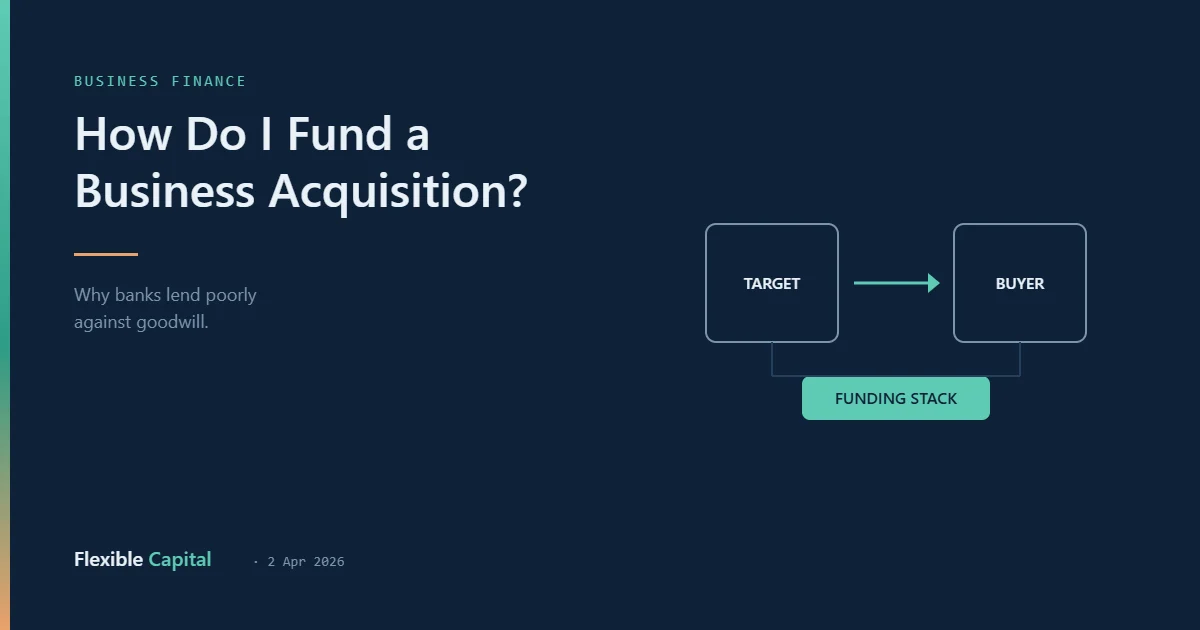
Banks lend poorly against goodwill for a simple reason. If the business fails, the goodwill evaporates at the same moment: nothing to repossess, nothing to sell. Goodwill drives the valuation but does little to support the borrowing, which is why an asset-backed business is easier to fund than a service provider of the same size.
Share sale or asset sale, and why your lender cares
In a share sale you buy the entity itself. Contracts, licences, employees and history transfer with it, which matters where contracts can’t be novated or a licence is hard to reissue. You also inherit its liabilities, including anything undisclosed, so due diligence is heavier and lenders will want a clean position with the ATO and creditors.
In an asset sale you buy specified assets and goodwill into your own entity, leaving the vendor’s liabilities behind. Lenders prefer this and security is cleaner, but you may need to renegotiate contracts, leases and supplier terms, and employees are formally re-engaged.
The choice carries real tax consequences for both sides and is often the main negotiating point on price. Involve your accountant and solicitor before you agree a structure, not after.
Normalised earnings and the add-back argument
Valuations are usually a multiple of earnings, and that figure is rarely the one in the accounts. Vendors present normalised EBITDA: reported earnings adjusted to show what the business would earn under an ordinary owner.
Common add-backs include above- or below-market director salaries, private vehicles and travel run through the business, one-off legal costs, related-party rent below market, and costs that won’t recur.
Some are legitimate. Others are optimistic. A lender tests each one, strips out what it can’t substantiate from three years of financials and tax returns, then adds back a market salary for whoever runs the business, often you.
Run that exercise before relying on the vendor’s figure. Two or three contested add-backs move a valuation by a multiple of themselves, and it is better to find out during negotiation than credit assessment.
Where the money usually comes from
Few acquisitions are funded from one source; a workable structure combines several.
- Your own contribution. Most lenders expect meaningful skin in the game, commonly 20% to 50% of the price depending on sector, asset backing and experience. Cash, or equity in property offered as security.
- Property security. Property remains the cheapest and most flexible security for goodwill. Without it the deal isn’t impossible, but the structure differs and pricing is higher.
- Asset and equipment finance. Fund trucks, machinery or fit-out separately against the assets, keeping unsecured goodwill lending as small as possible.
- Cash-flow lending. Some non-bank lenders lend against demonstrated earnings rather than security. Terms are shorter, pricing higher, covenants tighter.
- Vendor finance. The seller leaves part of the price outstanding, repaid over an agreed term. It cuts the day-one requirement and signals the vendor believes their own numbers.
- Earn-outs. Part of the price is contingent on agreed performance targets after settlement. This shifts risk back to the vendor and bridges a valuation gap, but write the measurement terms precisely or you’ll argue about them in year two.
Lenders read both as de-risking, along with industry experience on your side, a vendor who stays through handover, contracts confirmed as transferring, and a management team who intend to remain.
Don’t forget working capital
The most common oversight is funding the purchase to the last dollar and starting day one with nothing to trade on. You must cover payroll, stock and creditors before the business generates cash, and if trade is seasonal or lumpy that can be substantial. Size it deliberately and fund it separately, through a working capital facility, an overdraft, or invoice finance against the debtor ledger you’re acquiring.
Have this ready before you approach a lender
Preparation is most of the difference between a fast approval and a slow decline.
- Three years of financial statements and tax returns for the target, plus year-to-date figures
- A schedule of add-backs with evidence for each
- Aged debtor and creditor listings, a stock listing, and the asset register with condition and age
- Key customer contracts, including expiry and change-of-control clauses, plus leases and licences
- Your own position: assets and liabilities statement, tax returns, evidence of your contribution
- A short, honest plan: what you’ll change, what you’ll leave alone, and the handover
Your next step
Before you sign anything binding, get an independent view of the valuation and a realistic read on how much of the price can be borrowed. That number shapes what you can offer and how the deal should be structured, and it is far cheaper to learn early.
Flexible Capital arranges acquisition and working capital funding from $100,000 to $20 million, alongside your accountant and solicitor. If you have a target in mind, a conversation before the offer is worth more than one after.