A vehicle is the second-biggest purchase most people make. For a business adding a ute or a small fleet, it is often the first real piece of finance it takes on.
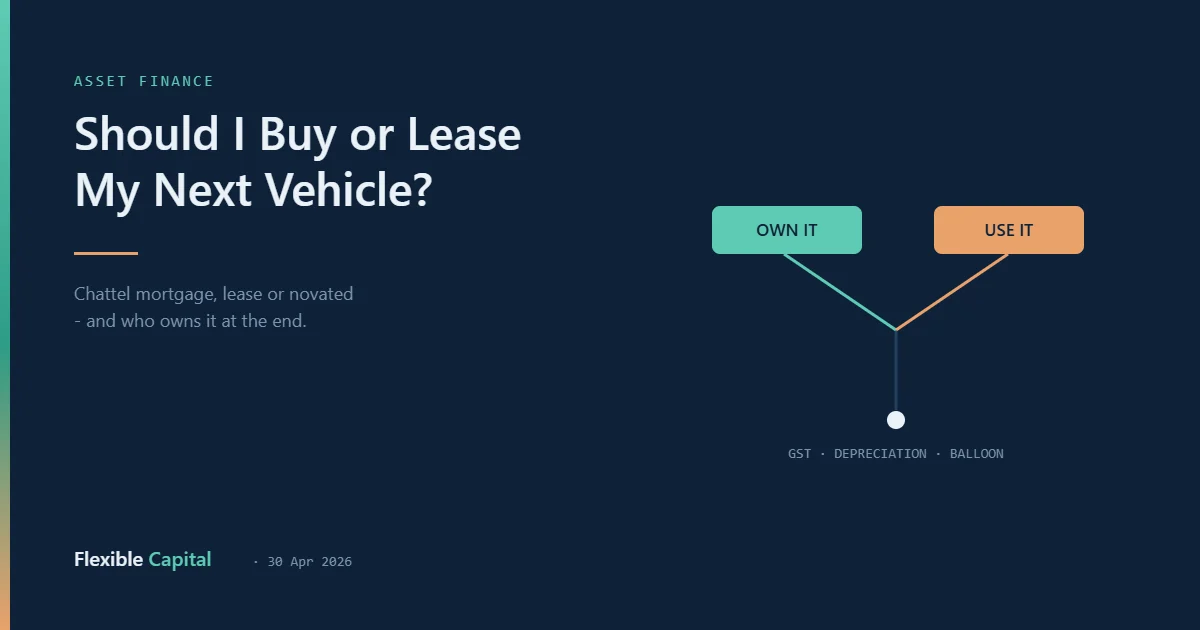
People frame the decision as buy or lease. The more useful questions are narrower: who owns the vehicle at the end, whose tax return the deduction lands on, and what the repayment does to cashflow. Answer those three and the product usually picks itself. What follows is general information — your accountant should run your own numbers.
Chattel mortgage: you own it from day one
A chattel mortgage is a loan to buy a vehicle used predominantly for business. You take ownership at purchase and the financier registers a security interest until the loan is repaid. Terms typically run from one to seven years, so repayments can be shaped around your cashflow.
Because you own the asset, it sits on your balance sheet and you generally claim depreciation plus the interest component of your repayments. If you are registered for GST, the GST on the purchase price is usually claimable as an input tax credit in the period of purchase, subject to your business-use percentage and the car rules. That early GST credit is why chattel mortgages remain the default for tradies and small fleets.
The three leases, and how they differ
“Lease” covers three quite different arrangements.
Finance lease
The financier buys the vehicle and leases it to your business for a fixed term, with a residual payable at the end. You run it, but you do not own it during the term. Lease payments are generally deductible to the extent of business use, and GST is usually handled on the payments rather than the purchase price. At the end you pay out the residual, refinance it, or hand the vehicle back — and what you may do is set by the lease document, not by the salesperson.
Operating lease
Closer to a long-term rental. The financier keeps the vehicle and carries the residual value risk, and the monthly charge often bundles registration, servicing, tyres and sometimes fuel. Kilometres are capped, and exceeding the cap costs you.
Operating leases cost more than equivalent finance and you never own the vehicle. What you buy is predictability: no surprise repair bills, no residual value risk, one figure to budget. For businesses running vehicles for staff, that is often worth the premium.
Novated lease
A three-way arrangement between an employee, their employer and a financier. The employer takes the payments from pay through a salary packaging arrangement, and the obligation transfers back to the employee if they leave.
Whether it is worthwhile depends heavily on the employee’s marginal tax rate and on Fringe Benefits Tax. Since the FBT statutory formula moved to a flat rate in 2011, the old advantage of driving big distances disappeared, making novated leases more attractive to shorter-distance drivers. Concessional FBT treatment for eligible low-emissions vehicles has also been narrowed in recent years, so check before assuming an electric vehicle qualifies. At the end the vehicle usually goes back to the financier, though many will let the employee buy it out at the residual.
Balloons and residuals: the payment you have not made yet
A balloon (on a chattel mortgage) or a residual (on a lease) is a lump sum deferred to the end of the term. It lowers your monthly repayment, sometimes substantially, which is why it is so often agreed to without much thought. Two things to be honest about. The balloon does not reduce what you pay overall — you are financing more of the vehicle for longer. And when it falls due you will need the cash, refinance it, or sell. If resale value has dropped below the balloon, you are writing a cheque to walk away from a car you no longer have.
Balloons are a legitimate way to match repayments to seasonal income. They are a poor way to make an unaffordable vehicle look affordable.
GST, depreciation and the car limit
Your deduction is only ever for the business-use portion: if the vehicle does 70% business kilometres, that is the proportion in play, and you need a logbook to support it rather than an estimate.
There is also a car limit capping the depreciation you can claim on a passenger car, which flows through to the GST credit as well. It is indexed and changes, so we will not quote a figure. It matters because above the entry-level end of the market, the tax outcome is not proportional to what you spend. Ask your accountant for this year’s number before you sign, and whether the vehicle you want even counts as a car for these purposes.
Same vehicle, three different answers
Sole trader. The vehicle and the finance are in your own name and personal use is usually a real component, so a chattel mortgage with a well-kept logbook is common. With no separate legal entity, your borrowing capacity and the business’s are the same thing.
Company. The company can own the vehicle outright, and the decision becomes one about balance sheet, deductions and FBT on private use. Directors will still usually be asked to guarantee the finance.
Employee. You are not choosing a structure — you are weighing a novated lease against an ordinary car loan, and the answer turns on your marginal rate, your employer’s packaging arrangements and how long you expect to stay.
Working out which one fits
Before you talk to a dealer, write down three numbers: what you can comfortably repay each month, how long you will keep the vehicle, and your business-use percentage. Take those to your accountant for the tax side, and to a broker for the funding.
Want to see what a chattel mortgage and the lease options look like for the vehicle you have in mind? Get in touch with Flexible Capital and we will lay the structures side by side, so the choice is commercial rather than a guess.